
Place paper against a wall, stand with heel touching the wall, mark the longest toe, then measure heel to toe.
Measure both feet and use the longer one.Best for using measured foot length as the anchor for international shoe sizes.
Shoe Size Chart
Compare foot length with common shoe size systems before buying sneakers, boots, flats, or casual shoes online.
Measure and get a size suggestion
Use your own measurements to find the closest reference row, then confirm with the brand chart.
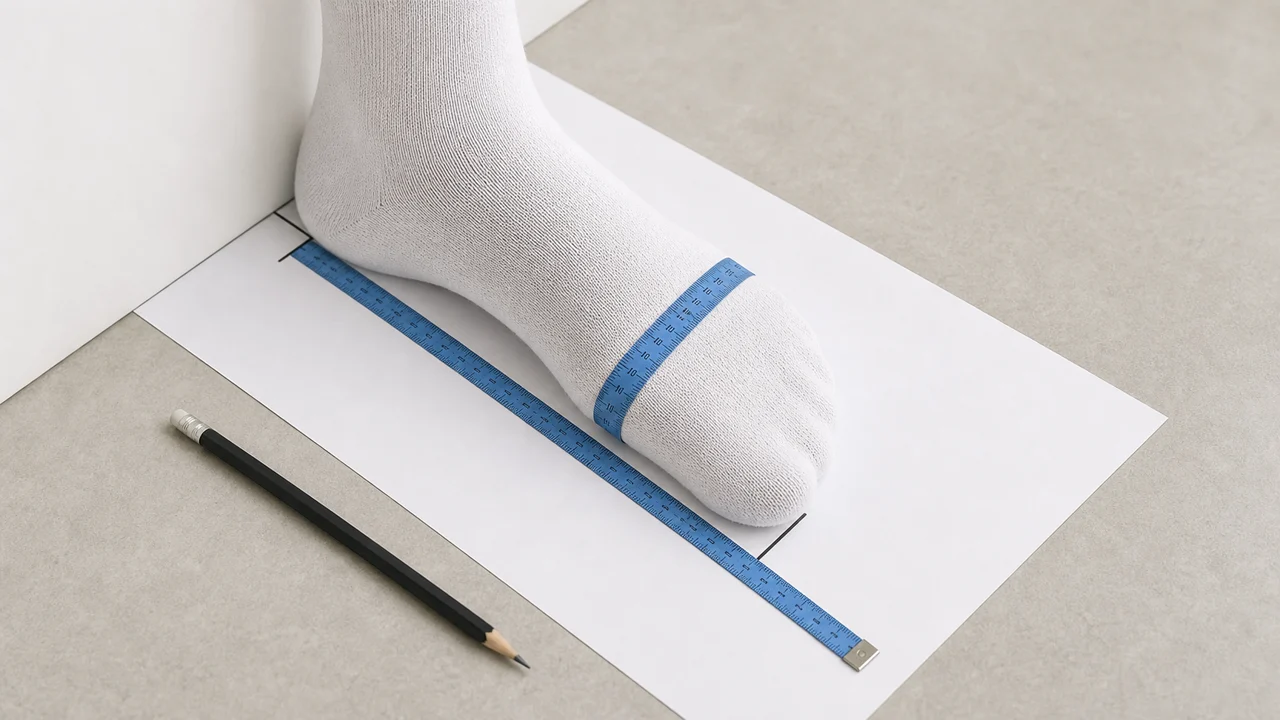
How to measure
Shoes- Stand on paper with weight on the foot.
- Mark heel and longest toe, then measure the distance.
- Measure both feet and use the larger foot length.
Your measurements
Closest reference
Enter the measurements you have. A partial result is okay, but more fields give a better match.
Reference only. Product cut, ease, width, material, and brand rules can change the final size.Measurement details
Measure on a hard floor with the socks you plan to wear. Feet can swell during the day, so evening measurements are often safer.
Measure across the widest part of the forefoot, usually around the ball of the foot.
If length is right but the shoe pinches, check wide or extra-wide options.For children, leave a little growth room without making the shoe loose enough to slide.
Too much extra length can make walking less stable.Walking and running shoes usually need toe room; dress shoes may fit closer depending on shape.
Always compare the brand chart and return policy before buying.| Foot length | US men | US women | UK | EU | JP | CN (mm) | CN retail |
|---|---|---|---|---|---|---|---|
| 20.0 cm | 2 | 3.5 | 1.5 | 31 | 20 | 200 | 30 |
| 20.5 cm | 2.5 | 4 | 2 | 32 | 20.5 | 205 | 31 |
| 21.0 cm | 3 | 4.5 | 2.5 | 33 | 21 | 210 | 32 |
| 21.5 cm | 3.5 | 5 | 3 | 34 | 21.5 | 215 | 33 |
| 22.0 cm | 4 | 5.5 | 3.5 | 35 | 22 | 220 | 34 |
| 22.5 cm | 4.5 | 6 | 4 | 36 | 22.5 | 225 | 35 |
| 23.0 cm | 5 | 6.5 | 4.5 | 37 | 23 | 230 | 36 |
| 23.5 cm | 5.5 | 7 | 5 | 38 | 23.5 | 235 | 37 |
| 24.0 cm | 6 | 7.5 | 5.5 | 39 | 24 | 240 | 38 |
| 24.5 cm | 6.5 | 8 | 6 | 39.5 | 24.5 | 245 | 39 |
| 25.0 cm | 7 | 8.5 | 6.5 | 40 | 25 | 250 | 40 |
| 25.5 cm | 7.5 | 9 | 7 | 41 | 25.5 | 255 | 41 |
| 26.0 cm | 8 | 9.5 | 7.5 | 42 | 26 | 260 | 42 |
| 26.5 cm | 8.5 | 10 | 8 | 42.5 | 26.5 | 265 | 43 |
| 27.0 cm | 9 | 10.5 | 8.5 | 43 | 27 | 270 | 44 |
| 27.5 cm | 9.5 | 11 | 9 | 44 | 27.5 | 275 | 45 |
| 28.0 cm | 10 | 11.5 | 9.5 | 44.5 | 28 | 280 | 46 |
| 28.5 cm | 10.5 | 12 | 10 | 45 | 28.5 | 285 | 47 |
| 29.0 cm | 11 | 12.5 | 10.5 | 46 | 29 | 290 | 48 |
| 29.5 cm | 11.5 | 13 | 11 | 46.5 | 29.5 | 295 | 49 |
| 30.0 cm | 12 | 13.5 | 11.5 | 47 | 30 | 300 | 50 |
| 30.5 cm | 12.5 | 14 | 12 | 48 | 30.5 | 305 | 51 |
| 31.0 cm | 13 | 14.5 | 12.5 | 49 | 31 | 310 | 52 |
| 31.5 cm | 13.5 | 15 | 13 | 49.5 | 31.5 | 315 | 53 |
| 32.0 cm | 14 | 15.5 | 13.5 | 50 | 32 | 320 | 54 |
| 32.5 cm | 14.5 | 16 | 14 | 51 | 32.5 | 325 | 55 |
| 33.0 cm | 15 | 16.5 | 14.5 | 52 | 33 | 330 | 56 |
Measure Foot Length First
The most useful shoe size chart starts with foot length rather than a label from another brand. Stand on paper, mark the heel and longest toe, then measure both feet. Use the larger foot as the reference. Add enough room for comfort, especially for athletic shoes or styles worn with thicker socks.
Men's and Women's Shoe Size Differences
US men's and US women's labels are offset, so a single foot length can map to two different US labels. UK and EU systems use their own numbering patterns. If a shoe is unisex, compare foot length and brand guidance instead of relying only on a men's-to-women's shortcut.
Brand Fit Still Matters
Shoes vary by toe box shape, last, material, and intended use. A running shoe, leather boot, and pointed flat can all feel different at the same chart size. Read product reviews, return policies, and brand-specific fit notes when a chart result lands between sizes.
When to Size Up or Down
Size up when you are between sizes, plan to wear thicker socks, or need more toe room for long walks. Size down only when the brand explicitly runs large or the material stretches. Children's shoes need additional growth room, but too much extra length can cause tripping or poor support.
Why Foot Length Is Better Than an Old Shoe Label
Old shoe labels are a weak reference because brands use different lasts, toe shapes, and fit goals. A foot length measurement gives the chart a physical anchor before comparing US men's, US women's, UK, EU, JP, and CN labels. The safest workflow is to measure both feet, use the longer foot, then compare the product page's own centimeter or insole notes. This is especially important for imported shoes and unisex sneakers.
Shoe Width and Toe Box Notes
Length is not the whole fit story. A shoe can match foot length and still feel wrong if the toe box is narrow, the upper is stiff, or the foot is wide at the forefoot. For athletic shoes, leave toe room for walking and running. For boots, consider socks and instep height. For pointed flats or dress shoes, a brand-specific width note can matter more than a simple size conversion row.
Related Size Tools
Continue with closely related tools instead of jumping through an unrelated directory.
Shoe Size Converter
Best for cross-border shoe shopping where a store uses unfamiliar labels.
Clothing Size Chart
Best for explaining the difference between body measurements and apparel labels.
Size Chart Generator
Best for merchants who need a product-page size chart quickly.
Ring Size Chart
Best for matching an existing ring measurement to international size labels.
FAQ
Should I use foot length or my old shoe size?
Foot length is usually more reliable because old shoe labels vary by brand and region.
Are US men's and women's shoe sizes the same?
No. US women's labels are typically higher than men's labels for a similar foot length.
Why do EU shoe sizes vary by brand?
Brands use different lasts, rounding rules, and fit preferences even within the same region.
Does this chart guarantee a perfect shoe fit?
Use the result as a sizing reference, then check the brand or seller chart before buying. Materials, fit preference, country labels, and manufacturing tolerances can change the best choice.