
Choose a ring that fits the intended finger and measure the inside diameter edge to edge.
Do not measure the outside edge; that includes the metal thickness.Best for comparing international jewelry listings that use different regional labels.
Ring Size Converter
Convert ring labels across common international systems and keep the measurement reference visible while you compare listings.
Measure and get a size suggestion
Use your own measurements to find the closest reference row, then confirm with the brand chart.
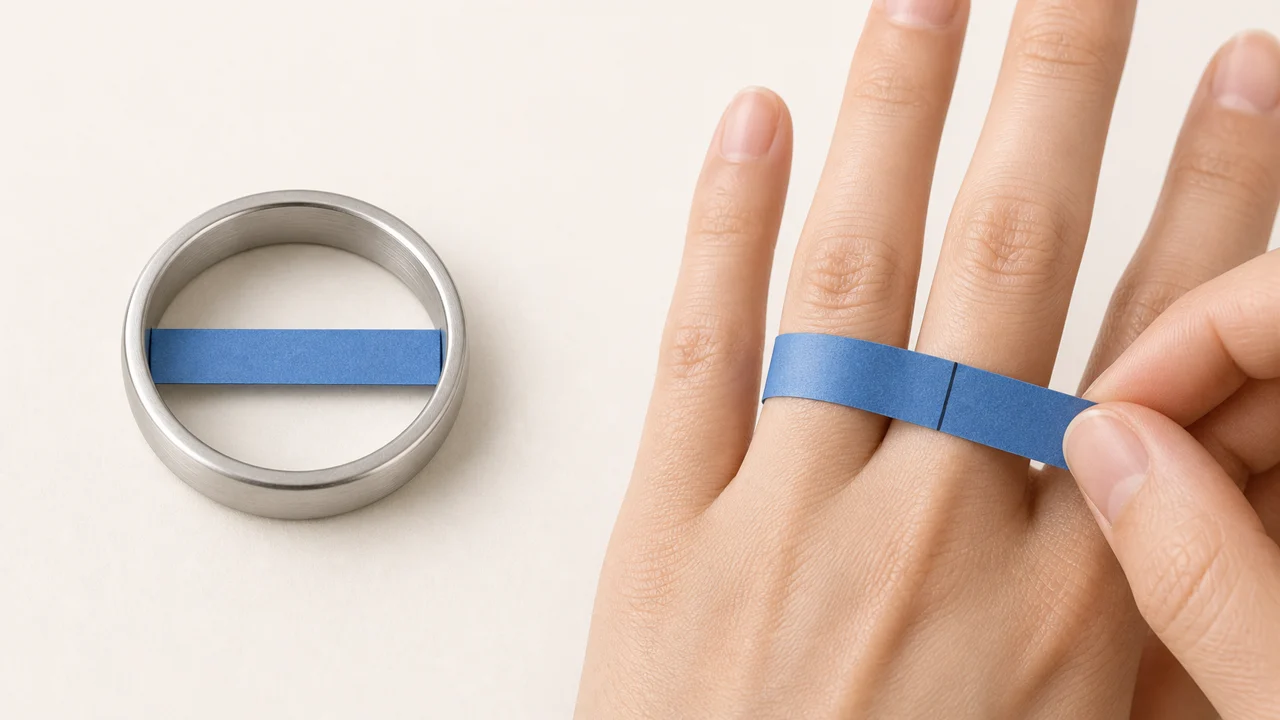
How to measure
Rings- Measure the inside diameter of a ring that fits.
- Or wrap a paper strip around the finger and measure the overlap.
- Repeat when hands are at normal temperature.
Your measurements
Closest reference
Enter the measurements you have. A partial result is okay, but more fields give a better match.
Reference only. Product cut, ease, width, material, and brand rules can change the final size.Measurement details
Ring size is best checked by millimeters. Use either a ring that fits or the finger circumference.
Wrap a strip of paper or soft tape around the finger, mark the meeting point, and measure the length flat.
The strip should pass over the knuckle without feeling loose.Measure when hands are at a normal temperature. Cold fingers can read small; warm or swollen fingers can read large.
Repeat a few times and compare the average.Wide rings and ring stacks feel tighter than narrow bands.
If you are between sizes, the larger size is usually safer.Ring calculator
Find the closest ring size
Enter an inside diameter or inside circumference in millimeters. The calculator compares your measurement with a shared ring size reference table.
Measure the inside opening, not the outside edge of the ring.
Closest matchUS 7
UK N 1/2 · ISO/EU 54 · JP 14 · CN 14
Inside diameter 17.3 mm · Inside circumference 54.4 mm · Difference 0.0 mm
Why Ring Size Conversion Is Tricky
International ring labels look simple, but they are not interchangeable. A US numeric size, a UK letter, and an EU circumference label can refer to the same physical opening. Converting by label alone can lead to mistakes when a seller uses a local standard differently, so this converter also shows diameter and circumference values for context.
Convert Before Buying International Jewelry
Use the converter when a marketplace, boutique, or handmade jewelry seller lists sizes in a different country system than the one you know. Match the known size row, then compare the converted labels with the seller's own chart. If a store provides millimeter measurements, prioritize those over a bare size name.
Check the Measurement Column
A conversion row should be treated as a shared reference point, not a universal promise. If your known ring is US 7, the EU and UK labels on that row are a useful starting point. However, the final purchase should still account for band width, ring profile, and whether the product page uses comfort-fit sizing.
Seller Notes for Conversion Tables
If you sell rings online, include both regional labels and millimeter references in the same size table. It helps customers from different markets understand your listing and reduces avoidable return requests. A short note about measurement method is also useful because customers may confuse outside diameter with inside diameter.
Why Size Labels Convert Better With Measurements
A bare conversion such as US 7 to UK N 1/2 can be useful, but it hides the actual physical opening. This converter keeps diameter and circumference visible so the user can sanity-check the row before buying. That matters because some international sellers round EU circumference, some list local JP/CN numeric labels, and some handmade sellers use their own chart. A measurement-backed conversion is harder to misread.
Conversion Use Cases for Online Jewelry Sellers
Jewelry sellers often receive customer messages that mix systems: a buyer may know a US size, a marketplace may require EU labels, and a supplier may provide millimeter dimensions. A conversion table with measurement columns reduces support friction and gives buyers a clearer reason to trust the listing. It is also safer than publishing one country label only, especially for cross-border stores and handmade rings with limited returns.
Related Size Tools
Continue with closely related tools instead of jumping through an unrelated directory.
Ring Size Chart
Best for matching an existing ring measurement to international size labels.
Ring Size Calculator
Best for turning a raw millimeter measurement into a practical ring size.
Printable Ring Size Chart
Best for at-home measuring when a physical ring gauge is not available.
Size Chart Generator
Best for merchants who need a product-page size chart quickly.
FAQ
Can I convert US ring size to UK size?
Yes. Find the US size in the converter table and read the UK letter on the same row.
Is EU ring size based on circumference?
EU labels often align with inner circumference in millimeters, but sellers may round values differently.
Do JP and CN ring sizes match exactly?
They often look similar in common charts, but always compare the seller's measurement values.
Should I use size label or millimeters first?
Use millimeter measurements first when available, then use labels as regional shopping references.